Roofing Contractor in Gloucester Township, NJ

Leaks traced from the attic, honest repair-or-replace answers, and line-item estimates for homes on both sides of the Delaware.

Gloucester Township Roofing has spent 20+ years repairing, inspecting and replacing roofs for homeowners in Gloucester Township, NJ, and in the Camden County towns and Delaware River suburbs that surround it. Our work runs from leak tracing and storm repairs to full tear-offs, seamless gutters, flat roofs, slate, standing seam metal, chimney flashing and skylights, and we take on commercial roofs for retail and office owners along the township’s busy corridors.

Most calls begin with a drip or a stain rather than a plan to reroof. We treat those calls as a diagnosis first: the roof gets walked, the attic gets opened, and the real source of the water is found before a price is written. When a repair will hold, we tell you plainly, and when a roof has reached the end of its life, the estimate shows you why, line by line.

A large share of the township’s homes were built between 1970 and 1999, so many roofs here are on their second or third covering. That history shapes what we find under the shingles, from tired plywood to flashing that someone caulked instead of replacing, and it is why we price the hidden parts of a roof openly rather than leaving them for a change order.

Get Your Free Quote

Fast response • No obligation

So we can reach you about your request.

So we can send you a confirmation after you submit this inquiry form.

  • 20+ Years in Business
  • Line-Item Written Estimates
  • NJ and PA Contracts

What we do

Our Services

Roof repair and replacement for Gloucester Township, NJ

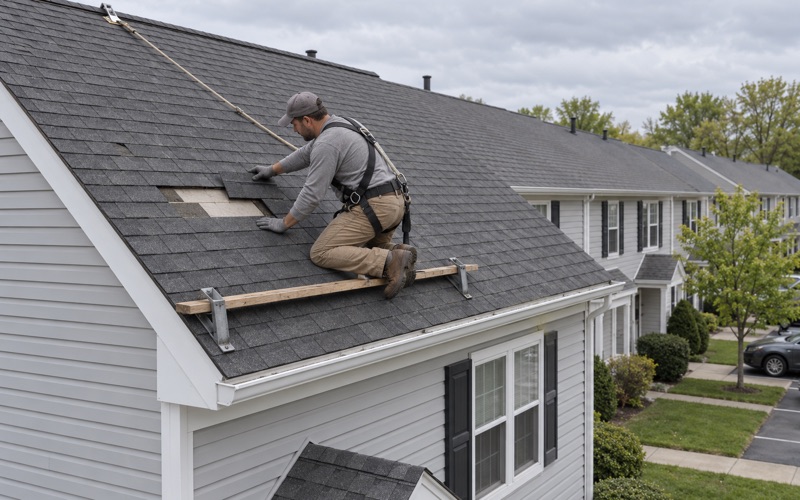
Matching shingles slid into a wind-blown gap on the end unit of a townhouse row near Lakeland in Gloucester Township.

Roof Repair

Shingle, flashing, decking and flat-roof repairs, traced from the attic first and priced line by line, with an honest answer on repair versus replacement.

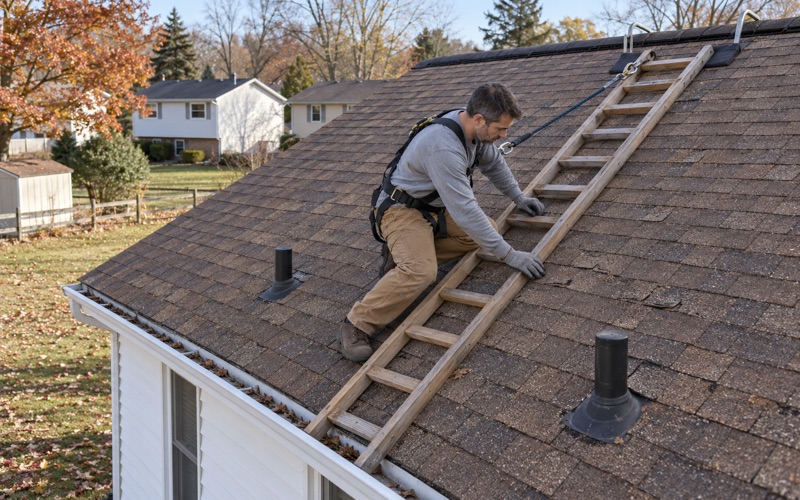
A roofer on a roof ladder checking cracked, cupped shingles on the upper roof of a 1970s split-level in Glendora.

Roof Inspection

A roof inspection that covers the shingles, flashing, attic, ventilation and gutters, with dated photos and a written report you can use to plan or sell.

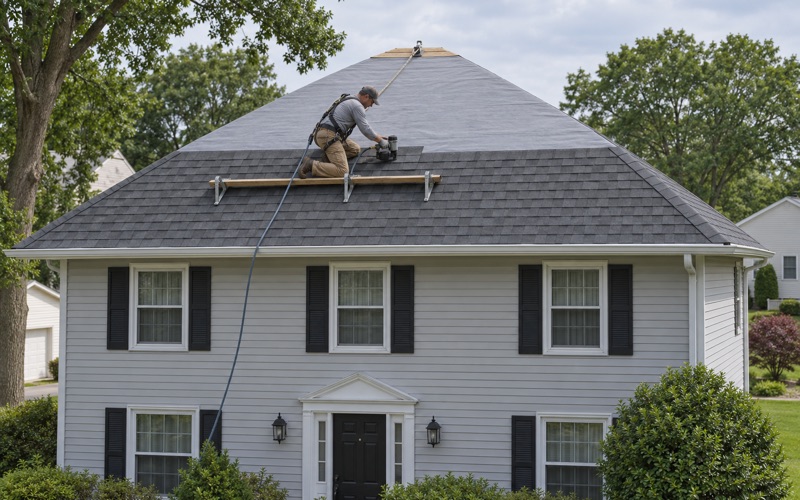
New charcoal shingles nailed up the front hip of a 1980s colonial in the Hilltop section of Gloucester Township during a roof replacement.

Roof Replacement

Full tear-off roof replacement with new flashing, balanced ventilation, decking priced per sheet in advance and shingle colors chosen on site.

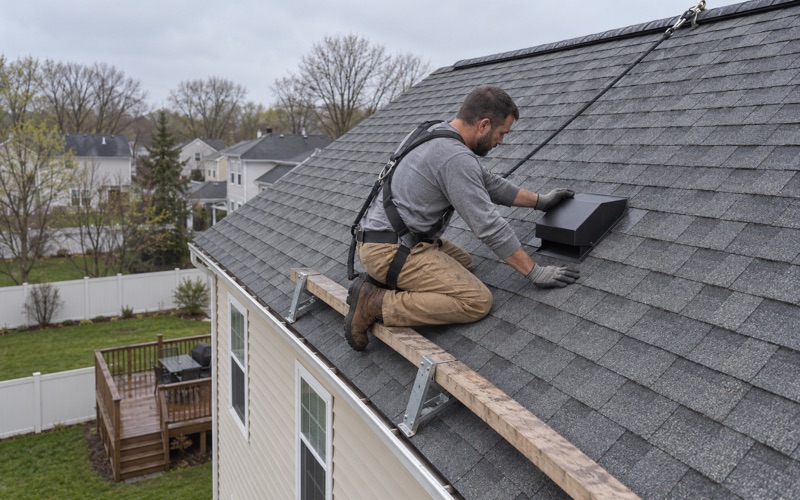
A new bathroom vent hood lapped into the shingles on the rear slope of an Erial colonial to stop a ceiling leak.

Roof Leak Repair

Roof leaks traced from inside the attic to where water really enters, then repaired with new flashing, pipe boots or shingles instead of a smear of tar.

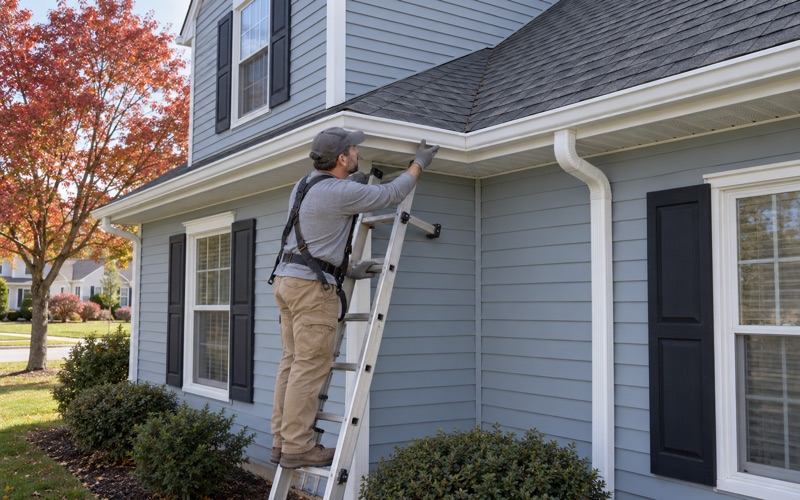
A mitered inside corner joining two new seamless gutters on an L-shaped colonial in the Lakeland section of Gloucester Township.

Gutter Installation

Seamless aluminum gutters formed on site, sized and pitched to the roof, with downspouts that carry water away and fascia repaired before anything is hung.

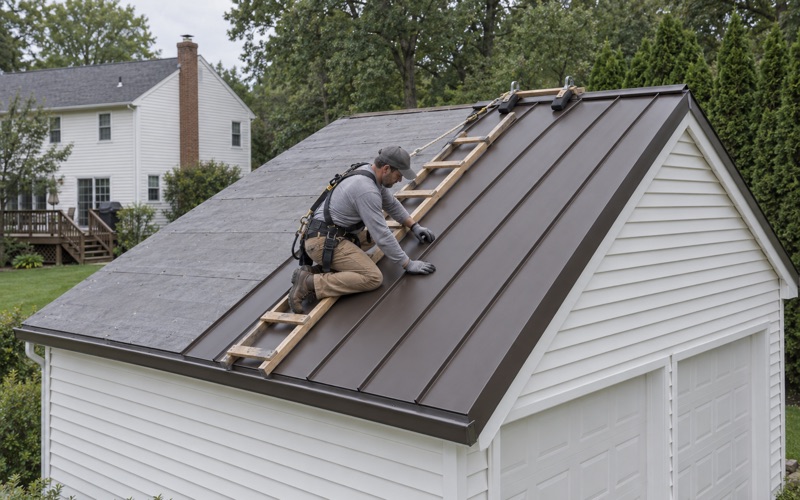
Dark bronze standing-seam steel panels going onto a detached garage behind a colonial in the Davisville section of Gloucester Township.

Metal Roofing

Standing seam and other metal roofs for whole houses, porches, additions and commercial buildings, with framing, underlayment and flashing done right.

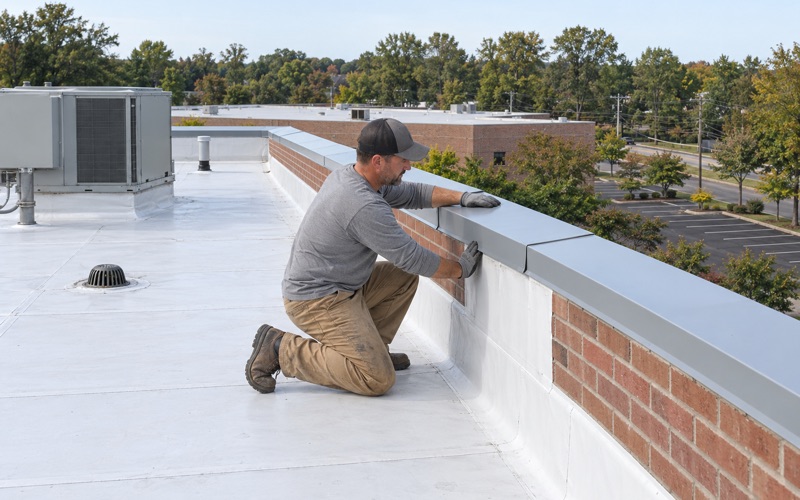
New metal coping fitted along the parapet of a two-story brick office building on the Black Horse Pike in Gloucester Township.

Commercial Roofing

Low-slope roof repair, replacement and maintenance for retail, office and light industrial buildings, scheduled around your business and its tenants.

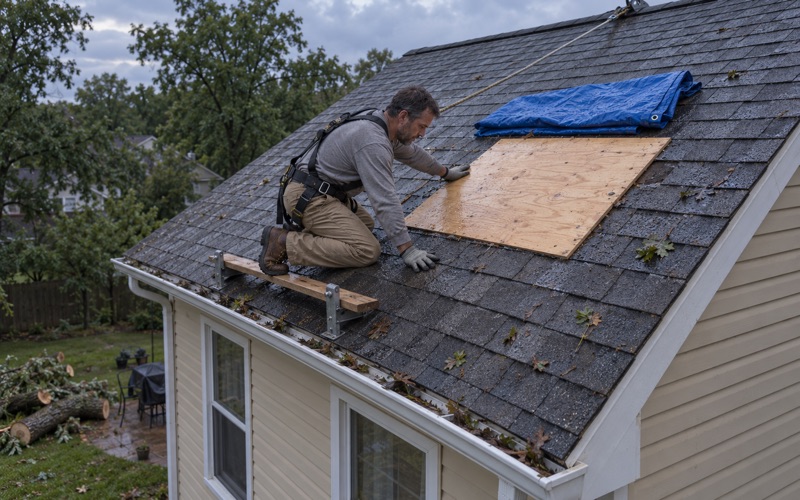
Plywood screwed over the hole a falling limb punched in the rear roof of a Blackwood colonial on a wet evening.

Emergency Roof Repair

Fast tarping and temporary repairs for storm damage, fallen limbs and active leaks, followed by a permanent fix and photos for your insurance claim.

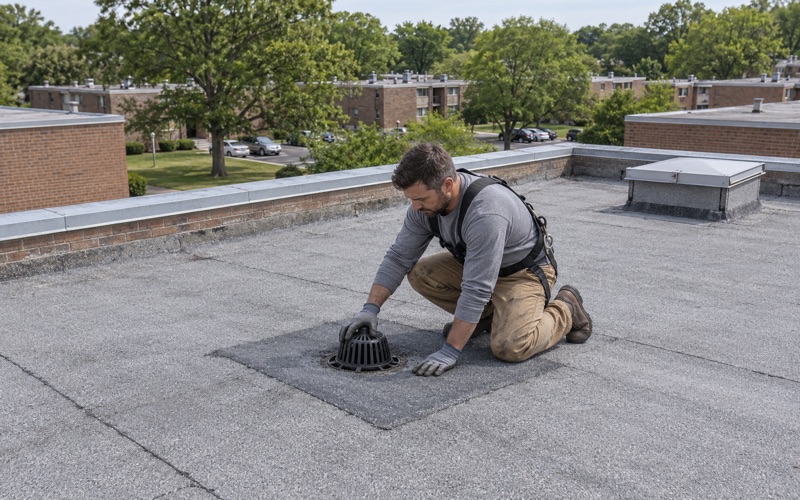
A patched split around a roof drain on the flat roof of a brick garden apartment building in Blackwood.

Flat Roof Repair

Repairs for leaking flat and low-slope roofs on porches, additions, rowhouses and commercial buildings, matched to the membrane already on the roof.

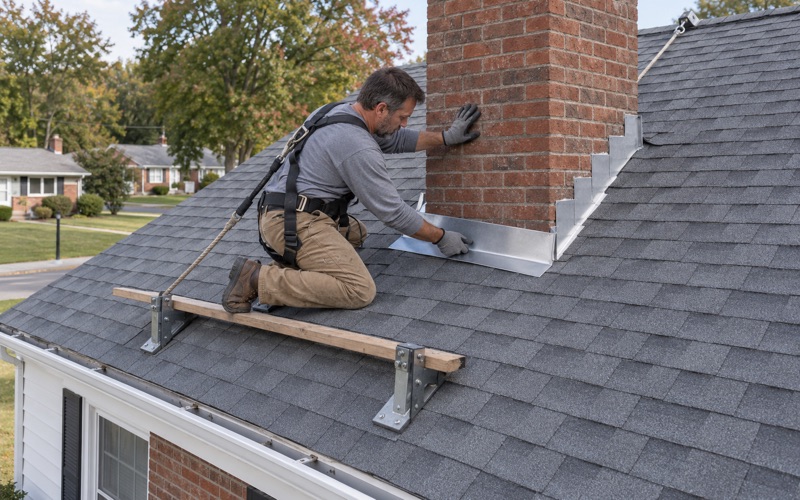
New apron flashing fitted across the front of a brick chimney on a 1960s ranch in the Glendora section of Gloucester Township.

Chimney Flashing Repair

Leaking chimneys reflashed the way they should be, with step flashing, counterflashing in the mortar and a cricket where water collects behind the stack.

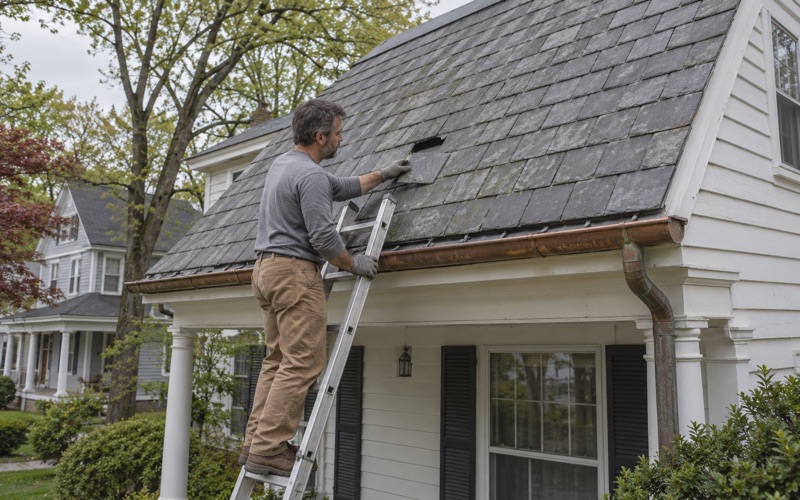
A replacement slate slid into the second course above the gutter of a 1920s frame house on an older Blackwood street.

Slate Roof Repair

Broken and slipped slates replaced with matching stone on slate hooks, with flashing, ridges and valleys rebuilt in metal that lasts as long as the slate.

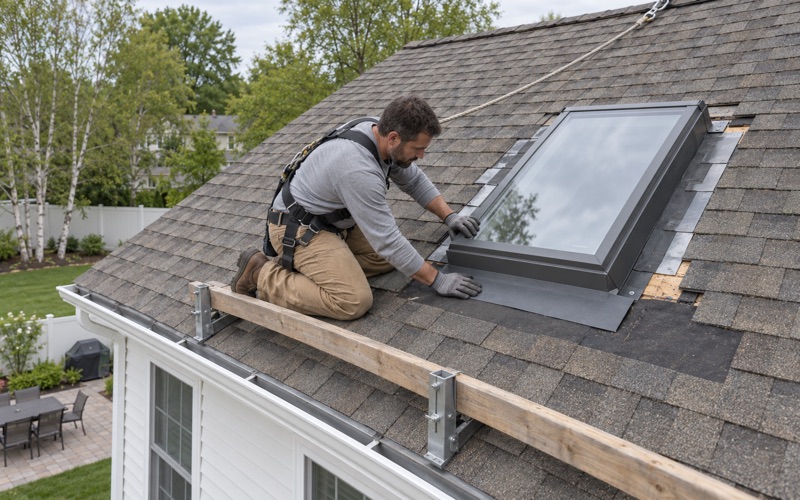
Sill flashing pressed in below a new curb-mounted skylight on the rear roof of a 1990s colonial in Glen Oaks, Gloucester Township.

Skylight Installation

New skylights framed, flashed and finished by roofers, and leaking skylights reflashed or replaced, ideally while the roof around them is open anyway.

Two Decades on Camden County Roofs

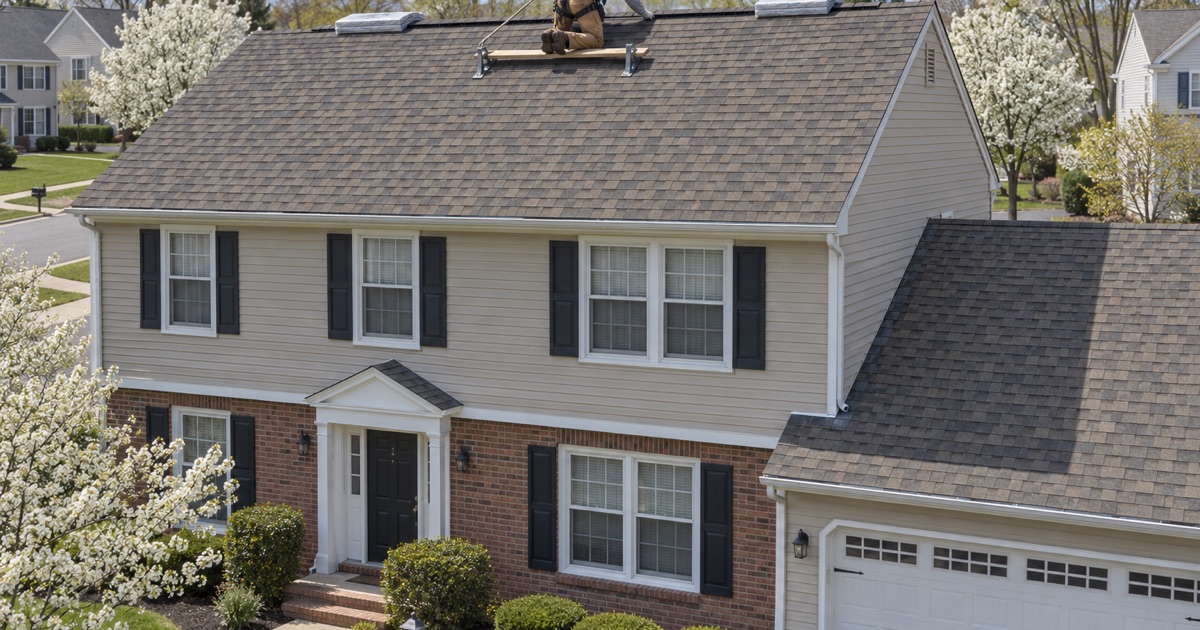
A roofer setting the last course of new shingles below the ridge of a 1980s colonial in the Chews Landing section of Gloucester Township.

20+ Years in Business

Gloucester Township Roofing has been in business for more than 20 years. Over that span shingle products, underlayments and state contractor rules have all changed, and our crews have worked through each change on real houses rather than reading about it. That experience matters most on older homes, where a second or third roof hides problems a newer contractor may not expect.

Why Choose Gloucester Township Roofing

Attic-First Leak Tracing

Every leak call includes a trip into the attic as well as onto the shingles, because water on a 1970s or 1980s township house often runs along rafters and decking before it ever reaches a ceiling, so the entry point gets found and fixed rather than guessed at and sealed from outside with a tube of roof cement.

Itemized Roofing Estimates

No estimate leaves our hands as a lump sum: tear-off, decking, underlayment, flashing, ventilation and gutters each get their own line, so an owner in Blackwood or Glendora comparing two bids can see exactly where the numbers part ways rather than trying to compare totals that quietly cover different scopes of work.

Decking Shown Before It Is Replaced

Rotted plywood uncovered once the old shingles come off is photographed and shown to you before a single sheet is swapped, at a per-sheet price fixed in the contract beforehand, so the decking line on the invoice holds no surprise rather than arriving as an open-ended charge after the dumpster has left.

New Flashing on Every Roof Replacement

Chimney, sidewall, skylight and valley flashing is replaced whenever we redo a roof, with fresh step flashing and counterflashing set where the old metal failed, so the most common leak points start over rather than being smeared with caulk that dries out and splits after a few summers.

Contracts Written to Each State

Never one template for both sides of the river: a township house gets a New Jersey home improvement contract with its right-to-cancel notice, and a Pennsylvania house gets one written to that state’s Home Improvement Consumer Protection Act, so every owner holds the protections their own state gives them rather than a form drafted for somebody else.

Township Rules Read for Each Address

Gloucester Township’s fee ordinance, O-24-08, lists re-roofing and a flat $75 charge for an attached single-family roof, while state code treats a detached house’s new roof covering as ordinary maintenance, so we confirm which rule fits the address before scheduling rather than pulling a permit by habit or skipping one a townhouse actually needs.

Roof Leaks and Repairs

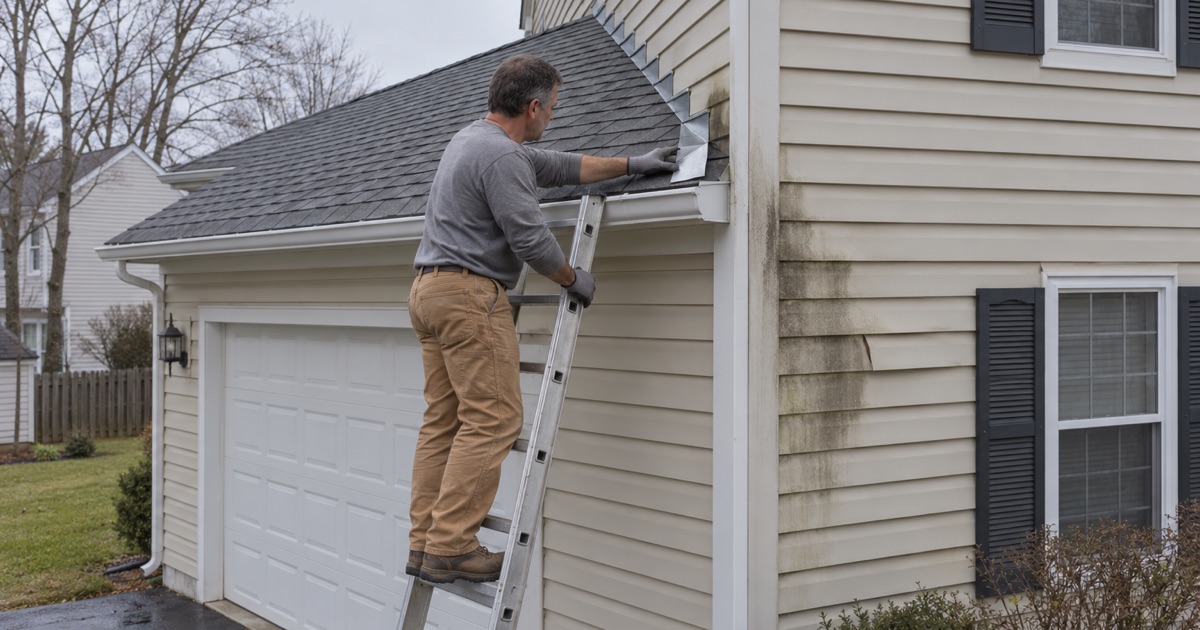
A kickout flashing fitted where a garage roof meets the two-story wall of an Erial colonial, below a water streak on the siding.

Finding a Hidden Roof Leak

A drip that appears on dry days, or only below a bathroom, is often a plumbing line or a bath fan venting into the attic rather than the roof itself. We check the attic for damp insulation and frost, follow pipe runs and fan ducts, and only then climb onto the shingles. Sorting out the true source first keeps you from paying for a roof repair that was never going to stop the water.

Ceiling Stains After a Heavy Rain

A brown ring that grows after every downpour usually means water is slipping past the shingles or flashing and soaking the drywall from above. We match the stain to the roof plane overhead and trace upslope, since the entry is rarely directly over the spot. Catching it while the stain is small often means a flashing or shingle repair instead of new drywall and insulation as well.

Chimney, Vent Pipe and Skylight Leaks

Penetrations are where most roofs leak first: a cracked rubber pipe boot, chimney step flashing that has pulled loose, or a skylight curb whose metal has rusted through. We replace the failed part with new pipe boots, step flashing and counterflashing rather than coating over it. These are small jobs when caught early and expensive ones once water has rotted the deck around them.

Leaks Where Two Roofs or a Roof and Wall Meet

The line where a porch roof meets the house wall, or where an addition ties into the main roof, depends on step flashing, counterflashing and a kick-out at the bottom edge. When any of those is missing, water runs behind the siding and into the wall framing. We open the joint, install the right flashing, and add the apron or kick-out piece the old work skipped.

Wind-Lifted and Missing Shingles

Strong gusts can unseal a row of shingles or tear tabs clean off, leaving nails and underlayment exposed to the next rain. We replace missing pieces with a matching product where one is still made, reseal lifted rows, and check the nailing on the surrounding area. The National Weather Service confirmed EF1 tornadoes in the township in 2019 and again in 2022, so wind damage here is a practical concern.

Ice Dams and Winter Eave Leaks

An ice dam forms when attic heat melts snow higher on the roof and the water refreezes at the cold eave, backing up under the shingles. The lasting cure is better air sealing and ventilation, with a self-adhering ice and water barrier meeting ASTM D1970 along the eaves on the next roof. New Jersey code requires that barrier only where the January average is 25 degrees or colder, which leaves out South Jersey, but we still recommend it on low, shaded eaves.

Leaks Behind Gutters and Rotted Fascia

When a gutter overflows, or the shingles stop short of the eave, water runs down the back of the gutter and into the fascia board. Over a few seasons that board softens, the hangers loosen, and the leak shows up on a soffit or porch ceiling. We replace the rotted wood, install drip edge at the eave, and rehang or replace the gutter so water lands where it should.

Repair or Replace a Leaking Roof

A single failed boot or torn flashing on an otherwise sound roof should be repaired, and we say so even when a replacement would be the bigger job for us. Widespread granule loss, curling or brittle shingles, soft decking in several places, and repeat leaks in different spots point the other way. We show you photos of what we found so the decision rests on the roof’s condition, not on a pitch.

Replacing a Roof on a South Jersey or Philadelphia-Area House

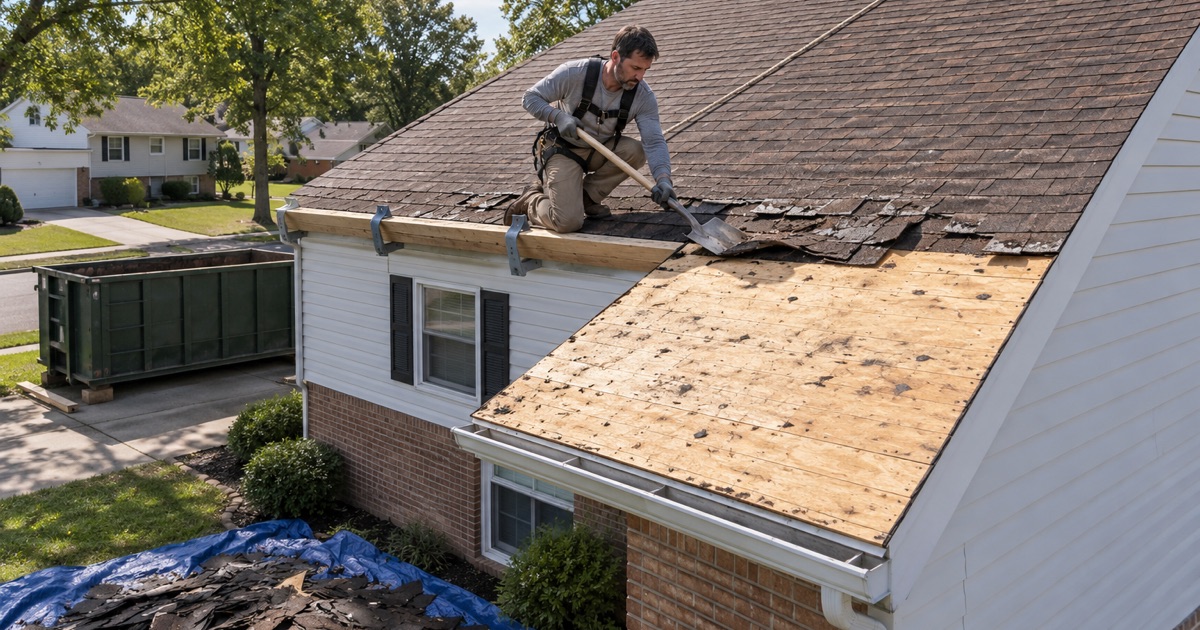
Two old layers of shingles coming off a 1970s bi-level in Blackwood at the start of a full roof replacement.

How a Full Roof Tear-Off Runs

A tear-off starts with a dumpster in the driveway and tarps over shrubs and windows, then the old shingles and underlayment come off down to the deck. We inspect and replace soft decking, install drip edge, underlayment and flashing, and then lay the new shingles and ridge vent. Each day ends with the gutters cleared and a magnet sweep of the lawn and driveway for stray nails.

Re-Roof Permits in New Jersey and Pennsylvania

In New Jersey, replacing the roof covering on a detached one- or two-family house is ordinary maintenance under N.J.A.C. 5:23-2.7, so that work needs no construction permit, while attached homes, multifamily buildings and structural repairs still do. Pennsylvania leaves more to each township through the state code’s repair exemption, and some, such as Concord and Upper Chichester, list re-roofing as permit work. We check the address before quoting.

The 25 Percent Rule and Why It Does Not Apply Here

Search results often claim that a roof more than 25 percent damaged must be fully replaced. That rule comes from the Florida Building Code, not from New Jersey, which deleted its own 25 percent roofing limit in 2018. Some Pennsylvania townships set their own thresholds; Plymouth Township, for example, exempts work on a quarter of the roof or less within 12 months. We explain which rule, if any, reaches your house.

Shingle Overlay Versus Tear-Off

Laying new shingles over an existing layer saves the tear-off cost, but it hides the deck, traps old flashing under new material and adds weight to the framing. Some older houses here already carry two layers from an earlier overlay, and the residential code does not allow a new covering over two existing ones. We nearly always recommend a full tear-off so the deck can be inspected, and we put the tradeoff in writing either way.

Architectural Shingles, Wind and Impact Ratings

We install architectural, or laminated, shingles such as GAF Timberline HDZ, Owens Corning Duration and CertainTeed Landmark on most replacements. Wind performance is tested under ASTM D3161 Class F and ASTM D7158 Class H, impact resistance under UL 2218 Class 4, and fire performance under the ASTM E108 / UL 790 Class A rating. An impact rating may earn an insurance discount, but it is not a hail warranty, and we say so plainly.

Choosing a Shingle Color for Brick, Stone and Siding

A shingle that looks gray on a sample board can read green or brown against red brick, tan stone or white vinyl siding. We bring full-size samples to the house and hold them against the walls in daylight, so the color is judged against your actual exterior rather than a showroom light. That matters most on brick-front colonials and split-levels, where the roof fills much of what the street sees.

Balancing Soffit Intake and Ridge Exhaust

An attic breathes through intake vents at the soffit and exhaust at the ridge, and the two need to be balanced by net free area to keep the space dry. Many older houses have painted-over soffits or a single gable louver, leaving the attic hot in summer and damp in winter. We open or add intake, install ridge vent and check the figures so the new shingles are not baked from underneath.

Replacing a Roof Under Solar Panels

The panels have to come off before the old roof can, and they go back only after the new one is finished. We plan the removal and reinstall with your solar company or an electrician well ahead of the job, set our schedule around their dates, and flash the mounts properly on the new deck. Discovering on the morning of a tear-off that nobody booked the panel crew wastes days and leaves a roof half open.

Townhouse, Twin and Rowhouse Roof Replacement

Roughly one home in three in the township is not detached, and attached roofs raise questions a single house never does: who owns which section, how the seam at the party wall is tied in, and whether the association maintains the roof at all. Attached work also needs a permit in New Jersey. We read the association rules when an owner can share them, and we coordinate with the neighbor when a roof is shared.

Shingles, Slate, Metal and Flat Roofs

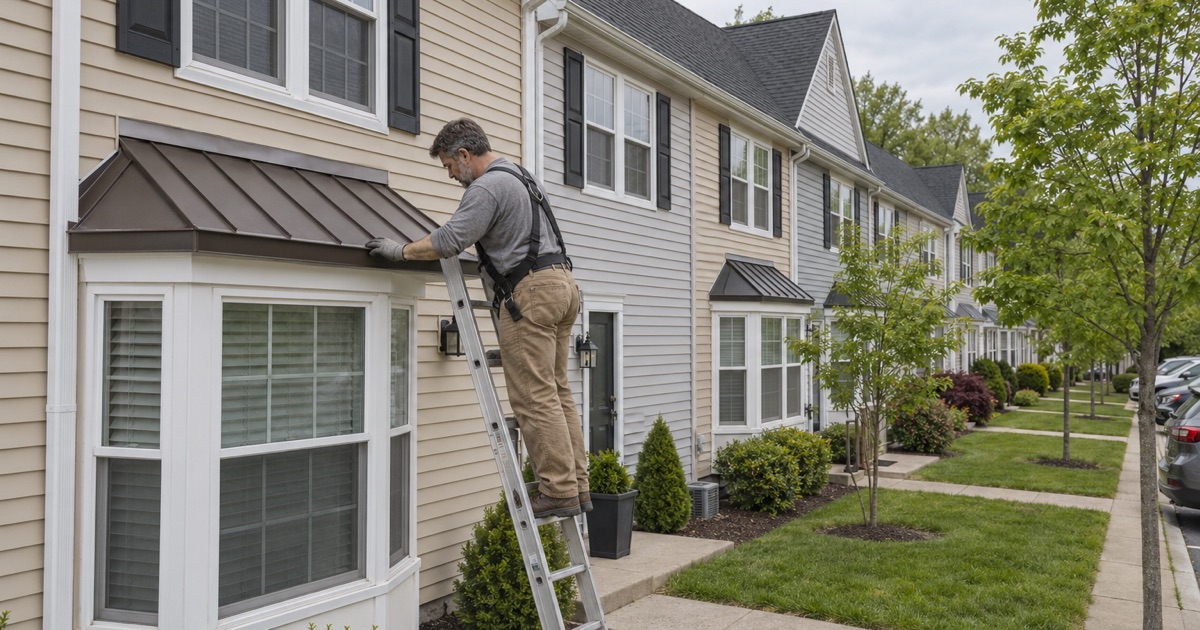
A dark bronze standing-seam metal roof over a bay window beneath the shingled main roof of a Blackwood townhouse row.

Slate Roof Repair and When Slate Is Worth Keeping

A natural slate roof can outlast several asphalt roofs when the slates are sound and only the fasteners or flashing have failed. We replace broken pieces with matching slate secured on slate hooks, and we reflash chimneys and valleys in metal meant to last as long as the stone. When a slate roof is worth keeping we tell you so, rather than steering you toward tearing off a roof that only needed repair.

Standing Seam Metal Roofing

Standing seam panels run from ridge to eave with raised, locked seams and hidden fasteners, so there are no exposed screw heads to back out over time. We install it across whole roofs and on low-pitch porches and additions where shingles struggle to shed water. It costs more up front than asphalt, and owners choose it for long service life, a clean profile and the way snow slides off.

Flat Roofs on Porches, Additions and Rowhouses

Low-slope sections over porches, rear additions and Philadelphia-area rowhouses cannot shed water the way a pitched roof does, so they depend on a continuous membrane and carefully finished edges. We strip failing layers, correct ponding where the structure allows, and install a new membrane with proper flashing at walls and drains. Patching a blistered flat roof over and over usually costs more than replacing it once.

EPDM, TPO and Modified Bitumen Membranes

EPDM rubber is a proven, flexible membrane; TPO and PVC single-ply sheets are heat-welded at the seams and reflect more sunlight; torch-down SBS and APP modified bitumen builds a thicker surface that stands up to foot traffic. We match the system to how the roof is used, its slope and what sits on top of it, and we walk you through the tradeoffs before you choose one.

Manufactured and Mobile Home Roofs

Manufactured homes, including those in land-lease communities such as Shenandoah Village in the township, have lightweight roof framing that cannot carry the same materials as a site-built house. We repair seams and flashing, recoat or replace membranes, and fit roof-over systems designed for these homes. Federal HUD standards set the roof-load and wind zones for each home, and we keep any new material within them.

Seamless Gutters, Downspouts and Gutter Guards

Seamless aluminum gutters are formed on site to the full length of each eave, leaving no joints along the run to leak. We size gutters and downspouts to the roof area they drain, pitch them correctly, and add guards where trees drop heavy leaf loads. Moving water off the roof edge and away from the foundation protects the fascia, the siding and the basement all at once.

Skylight Repair, Reflashing and Replacement

An older skylight that leaks often has a sound unit and failed flashing, so reflashing is the first fix we check. When the glass has fogged or the frame has cracked, we replace it with a curb-mounted or deck-mounted unit and a new flashing kit. Handling it during a roof replacement costs far less than opening the roof again a few years later.

Chimney Flashing and Crickets

Chimneys leak where masonry meets shingles, so they need step flashing tied into counterflashing cut into a reglet in the mortar joint. On the uphill side of a wide chimney, a cricket, also called a saddle, splits the water so it cannot pool against the brick. We rebuild both properly instead of smearing roof cement over the old metal and calling it fixed.

Storm Damage, Insurance and Paying for a Roof

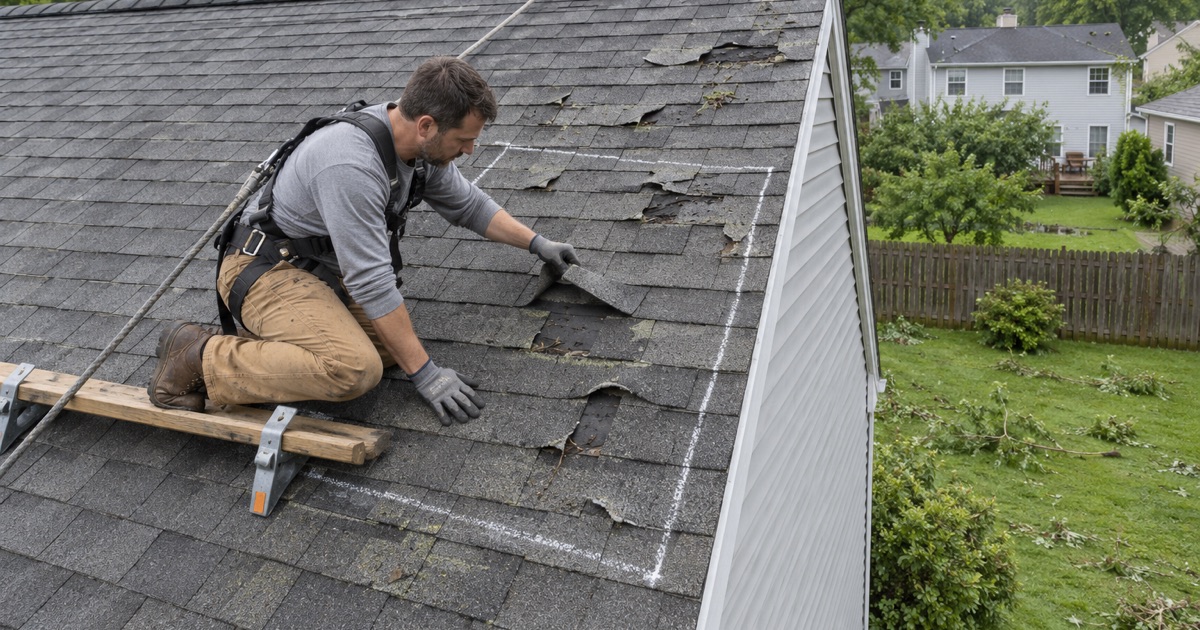
Wind-creased shingles marked out in chalk on the rear slope of a Blackwood colonial the morning after a summer storm.

First Steps After Storm Damage

Photograph the damage from the ground and inside the house, protect your belongings, and keep every receipt for tarps or emergency work, since policies generally expect you to prevent further damage. We can set a temporary repair, take dated photos and write up what we found for your claim. Call your insurer promptly; in New Jersey the carrier must acknowledge a claim within 10 working days under N.J.A.C. 11:2-17.

Does Homeowners Insurance Cover a Roof

Most homeowners policies cover sudden damage from wind, hail or a falling tree and exclude wear, age and poor upkeep. Whether a payout is replacement cost or actual cash value, which subtracts depreciation, depends on the policy wording, and some policies carry a separate roof endorsement. Your declarations page and your agent settle what is covered; we can only explain what a roofer sees on the roof itself.

Insurance on a 20-Year-Old Roof

Age alone does not cancel coverage for storm damage, but an older roof is more likely to be settled at actual cash value, which can pay well below the cost of a new one. Adjusters also look harder at whether damage is fresh or long-standing on an aging roof. We document an older roof with photographs that separate the storm damage from the ordinary wear, so each is described for what it is.

Storm Damage Versus Wear and Tear

Roof claims are often denied when an adjuster sees granule loss, curling or old leaks and calls the damage wear rather than storm. Creased shingles in a fresh pattern, torn tabs facing the wind, and new debris on the roof tell a different story. We photograph and describe both kinds of damage honestly, because an inflated report helps nobody once the adjuster climbs the ladder.

Public Adjusters and Who Negotiates Your Claim

In New Jersey, anyone paid to negotiate a property claim for a homeowner must be a licensed public adjuster under the Public Adjusters’ Licensing Act, N.J.S.A. 17:22B, and Pennsylvania’s Public Adjuster Licensing Law sets the same line. A roofer is not one. We will meet your adjuster on site when asked and point out the damage, but we never negotiate a claim or promise a settlement.

Contractor Registration and the Missing Roofing License

New Jersey requires home improvement contractors to register under the Contractors’ Registration Act, and P.L.2023, c.237 created a licensing system with a roofing specialty, but no licensing rules had been adopted as of October 2026, so no roofing license exists yet. Pennsylvania registers contractors with the Attorney General under its Home Improvement Consumer Protection Act. A roofer calling a registration number a license has it wrong.

Liability When a Roofer Is Hurt on Your Property

Roofing is dangerous work, and OSHA requires fall protection for residential roofers working 6 feet or more above a lower level under 29 CFR 1926.501(b)(13). A contractor carrying workers’ compensation and liability insurance protects you if a crew member falls, and New Jersey’s 2023 contractor law requires workers’ compensation unless an exemption applies. Ask any roofer for a current certificate of insurance before work begins.

Sales Tax on a New Roof Versus a Repair

In New Jersey, a roof repair is taxable, while a full new roof is a capital improvement and is exempt when documented on Form ST-8. In Pennsylvania the roofer pays tax on the materials, and the customer is not charged a separate sales tax line. We prepare the paperwork to fit the job and the state, so the tax treatment on your invoice matches the work actually done.

What a Roof Replacement Costs

Price follows the roof’s size and pitch, the number of layers to strip, how much decking is rotten, and how much flashing, ventilation and gutter work goes with it. Material choice moves it as well, from architectural shingles up to slate or standing seam metal. Our itemized estimates show each of those pieces, so you can see which choices drive the total and compare bids fairly.

Roof Financing and Payment Schedules

Many owners spread a new roof over a payment plan, and New Jersey law lets a homeowner cancel contractor-arranged financing without penalty when the contract itself is cancelled. In Pennsylvania, a deposit is capped at one-third of the price on jobs over $5,000. The township’s Home Improvement Program has also listed roofing among the repairs eligible for zero-interest deferred loans, which is worth asking about before signing.

Areas We Serve

Gloucester Township Roofing provides roofing throughout the greater Gloucester Township area, with the same crews and the same standards on every job.

Good to know

Frequently Asked Questions

How long does a typical roof replacement take?

A detached house usually takes one to three working days once the materials are delivered, and the range depends on the roof's size and pitch, how many layers come off, and how much decking turns out to be soft. Slate, standing seam and larger commercial roofs run longer. We hand you a schedule with the estimate and change it only for weather or for damage we have photographed and shown you.

Do you put your estimates in writing?

Yes. Every estimate is written and itemized, with tear-off, decking, underlayment, flashing, ventilation and gutters priced on separate lines. That format lets you lay our number beside another roofer's and see where the scopes differ, instead of guessing why two totals are thousands apart. Decking replacement is priced per sheet in advance so the final invoice holds no open-ended line.

Can you replace only part of my roof?

Often, yes. A single slope that took wind damage, a porch roof, or a flat section over an addition can usually be redone on its own, and we tie the new work into the old with proper flashing and shingle weaving. If the rest of the roof is near the end of its life, we tell you, because patching one face of a failing roof can mean paying for the same setup twice.

Do you work on houses in Pennsylvania as well as New Jersey?

We do. Our service area crosses the river into Delaware, Montgomery and Bucks County townships, and each job there is contracted under Pennsylvania's Home Improvement Consumer Protection Act. Permit rules differ from one Pennsylvania township to the next, so we check the specific township's published requirements before quoting, rather than assuming the New Jersey rule carries over.

What warranty comes with a new roof?

New shingles carry the manufacturer's material warranty, and the strongest system warranties usually require the matching brand's underlayment, starter, ridge and ventilation parts installed together. The longest terms are typically limited to owner-occupied single-family homes, with shorter terms for condos and associations. We go over the exact warranty document for the product you choose before you sign, so there are no surprises later.

Can you roof in the winter?

Yes, on suitable days. Asphalt shingles need some warmth for their sealant strips to bond, so in cold snaps we watch the forecast, hand-seal where the manufacturer allows it, and avoid opening a roof ahead of snow or freezing rain. Emergency repairs and tarping go ahead in any season, because a leak does not wait for spring.

How should I prepare my house before the crew arrives?

Move cars out of the driveway, take down wall hangings on top-floor rooms that might shake loose, and cover belongings stored in the attic, since dust and grit fall through during a tear-off. Let us know about pets, sprinkler heads and any fragile plantings near the walls. We tarp shrubs and windows ourselves and position the dumpster where it will not crack a driveway edge.

Do you handle commercial roofs?

Yes. We repair and replace low-slope roofs on retail, office and small industrial buildings, working with EPDM, TPO, PVC and modified bitumen systems. Commercial work in New Jersey falls outside the ordinary-maintenance exemption that detached homes enjoy, so we plan the permit and inspection steps into the schedule from the start and coordinate around business hours where we can.

What should I ask a roofer before hiring one?

Ask for the contractor's state registration number and a current certificate of insurance, a written itemized estimate, the shingle and underlayment products by name, and how rotted decking will be priced. Ask who cleans up and how nails are collected. Any roofer who calls a New Jersey registration a license, or offers to negotiate your insurance claim for you, is telling you something about how they work.

Can you match my existing shingles on a repair?

We try. When the same product line and color are still made, we use them; when they are not, we find the closest available match and show you a sample before installing it. Older shingles fade, so even an exact match can look a shade off at first. On slate and cedar we look for salvaged or matching material rather than patching with whatever happens to be on hand.

Ready to Get Started?

Request a free quote today and we'll get back to you fast.