Gloucester Township Roofing provides roof inspection in Gloucester Township, NJ, serving surrounding cities including Pine Hill, Bellmawr, Woodbury, Haddonfield and Mantua, backed by more than 20 years of repairing and replacing the same kinds of roofs we inspect. Our inspections cover asphalt, slate, metal and flat roofs on houses, townhouses and commercial buildings.
A proper roof inspection looks at the roof from both sides. We walk the surface where it is safe to do so, and we go into the attic to look at the underside of the decking, the rafters, the insulation and the ventilation. Most of what decides how long a roof will last is visible only from inside.
Every inspection ends with a straight answer. If the roof has years left, we say so, and if it needs a repair, we tell you what and why. When a roof is nearing the end of its life, we explain how much time it has and what to budget for, rather than pushing a replacement that can safely wait.
What Our Roof Inspection Covers
Shingles, Slate and Roof Surface
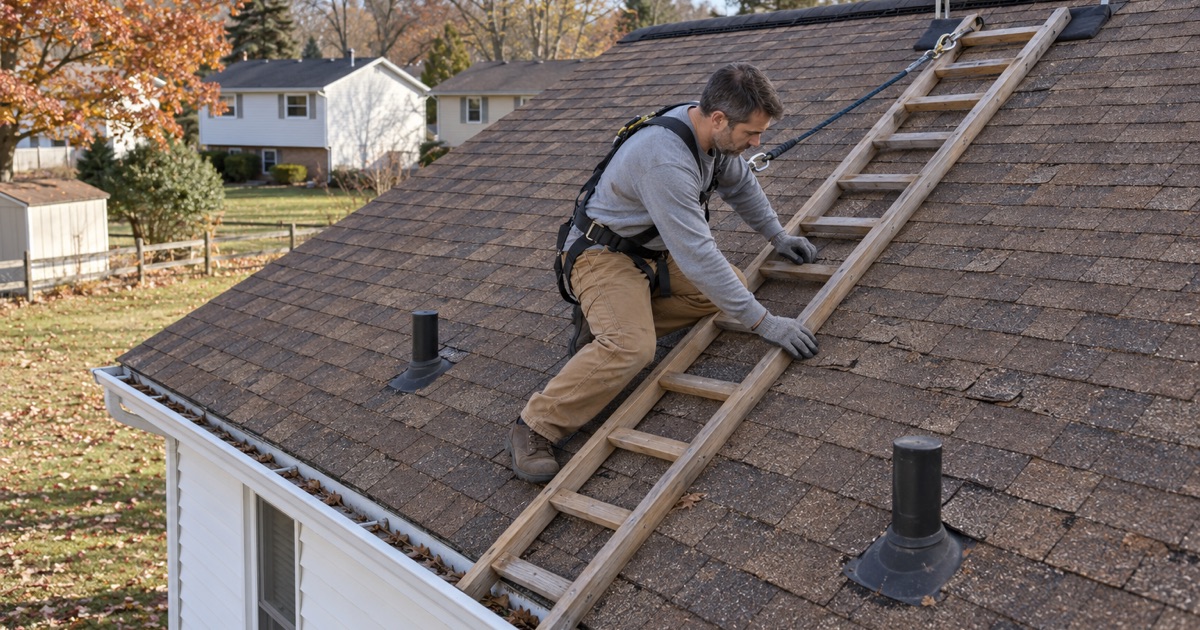
On the surface we check for granule loss, curling, cracking, lifted tabs, exposed nails and soft spots underfoot that suggest rotted decking below. On slate roofs we look for broken, slipped and delaminating pieces, and on metal roofs for loose fasteners, open seams and scratched finishes that can begin to rust.
We also note how many layers the roof carries and how the shingles were fastened along the edges. A roof that was overlaid on an older layer ages differently, and knowing that shapes every recommendation that follows in the report.
Flashing, Chimneys and Roof Penetrations
Flashing is where most leaks start, so it gets the closest look. We check step flashing along sidewalls, counterflashing set into the chimney mortar, the cricket behind wide chimneys, valley metal, skylight curbs, and every rubber pipe boot for cracks and gaps.
Any place where the old flashing has been covered with caulk or roof cement is noted, since those patches usually fail within a few seasons. We photograph each detail so you can see the condition for yourself rather than relying on a checklist.
Attic, Decking and Ventilation
In the attic we look for water stains on the rafters and sheathing, rusted nail tips, damp or flattened insulation, frost in cold weather, and daylight showing through around penetrations. Each one tells us something about where water or moisture is getting in.
We also check how the attic breathes. Balanced soffit intake and ridge exhaust, measured as net free area, keep the deck dry and the shingles cooler, and painted-over soffits or a single gable vent are common reasons an otherwise sound roof ages early.
Gutters, Fascia and Drainage
Gutters are checked for pitch, loose hangers, leaking joints and overflow marks, and we look at the fascia board behind them for softness. Missing drip edge along the eaves is noted, because water running behind the gutter is a frequent cause of rotted trim.
Downspouts should carry water well away from the foundation. Where they dump next to the house, we note it, since the same water ends up in basements and crawl spaces.
Roof Inspections for Sales, Rentals and Insurance
Buyers, Sellers and the Inspection Report Roof Item
A home inspection report that flags the roof can stall a sale until somebody explains what the finding means. We inspect the roof on behalf of either side and describe its condition, expected remaining life and any repairs needed, in plain language that helps both parties negotiate on facts.
Gloucester Township does not require a resale certificate of occupancy, having repealed it in 2009, so a roof issue at sale usually surfaces through the buyer’s own inspection rather than a township visit. Getting ahead of it with a roofer’s report gives a seller time to repair before listing.
Landlords and Rental Certificates
The township requires a rental certificate of occupancy at every change of tenant, which brings a property in front of an inspector more often than an owner-occupied house. A leak stain, loose gutter or missing shingle can turn into a repair list before a new tenant moves in.
We inspect rental roofs on a schedule that fits your turnover, document their condition with dated photos, and handle repairs between tenants. That keeps small roof problems from becoming a reason a unit sits empty.
Storm and Insurance Documentation
After a storm, dated photographs of the damage and a written description help when you file your own insurance claim. We separate fresh damage, such as creased or torn shingles and new impact marks, from older wear, because an honest report holds up better when an adjuster reviews it.
We will meet your adjuster on site when you ask and point out what we found. We do not negotiate claims, since in both New Jersey and Pennsylvania that is the role of a licensed public adjuster.
Older Roofs and Owners Planning Ahead
Many owners call not because anything is wrong but because the roof is old enough that they want to budget for it. An inspection gives a realistic estimate of remaining life, based on shingle condition, the number of layers and how well the attic vents, so a replacement can be planned for the right season instead of forced by a leak in January.
That matters most for owners on fixed incomes and for anyone planning to sell within a few years. Knowing whether a roof has two good years left or ten changes how you plan, and it costs far less to learn that from an inspection than from a ceiling stain.
Commercial Roof Inspections
Low-Slope Membrane Surveys
Commercial roofs covered with EPDM, TPO, PVC or modified bitumen are inspected for open seams, blisters, punctures, shrinkage at the edges and ponding water. We check scuppers, drains and edge metal, and we look closely at curbs and supports around rooftop HVAC units.
Low-slope roofs hide their problems well, because water can travel under a membrane a long way before it shows inside. Where a building has interior stains with no obvious surface defect, we probe suspect seams for wet insulation and mark each spot on a simple roof plan, so repairs can be targeted rather than guessed.
Maintenance Inspection Schedules
Building owners and property managers can set up regular inspections, usually before and after the hardest weather of the year. Each visit produces a short report with photographs so problems are tracked over time, and minor repairs can be scheduled before they grow into interior damage.
A record of each visit is also useful when a building changes hands or a lease comes up for renewal, since it shows the roof has been looked after and gives a buyer or tenant a realistic picture of what the roof will need over the next few years.
Our Step-by-Step Roof Inspection Process
Step 1: Inside First
We start in the attic or under the roof deck, noting stains, damp insulation, frost and ventilation, so we know what to look for once we are on the roof.
Step 2: The Roof Surface and Flashing
Next we walk or inspect the roof surface, check every flashing detail and penetration, and look at the gutters and fascia, photographing each finding as we go.
Step 3: The Written Report
You receive a written report with dated photos, a description of each condition, and a recommendation for each item, from leave it alone to plan for replacement.
Step 4: Estimate If You Want One
If repairs are needed, we can add an itemized estimate with each item on its own line. There is no obligation to hire us for the work, and the report is yours to use with any contractor.
- 20+ Years in Business
- Line-Item Written Estimates
- NJ and PA Contracts