
Gloucester Township Roofing handles gutter installation in Gloucester Township, NJ, serving surrounding cities including Pine Hill, Bellmawr, Woodbury, Haddonfield and Mantua, with more than 20 years of experience making roofs and gutters work together. We install seamless aluminum gutters and downspouts on houses, townhouses and commercial buildings, and we treat the gutter as the last piece of the roof, not an afterthought.
A gutter has one job: catch the water coming off the roof and carry it away from the house. When it overflows, leaks at the joints, or dumps water next to the foundation, the damage shows up somewhere else, in rotted fascia, stained siding, flooded window wells or a wet basement.
Because we are roofers first, we look at the roof edge before we hang anything. If the drip edge is missing, the fascia is soft, or the shingles stop short of the gutter, those problems are fixed first so the new gutters are hung on solid wood and actually catch the water.
Seamless Gutter Installation
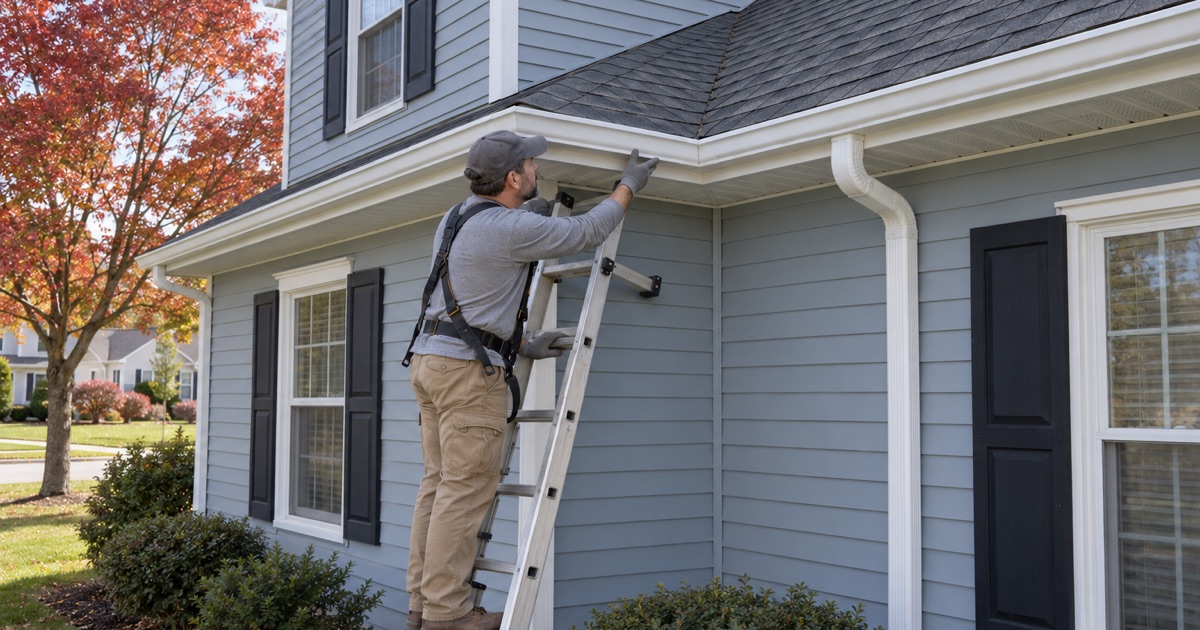
Seamless Aluminum Formed on Site
Seamless aluminum gutters are formed from a coil on a machine at your house, cut to the exact length of each eave. With no joints along the run, there are fewer places for leaks to start or for sections to pull apart, and the finished line looks cleaner from the street.
We hang them with hidden hangers screwed into the fascia and rafter tails at close spacing, which holds the gutter steady under heavy rain, snow load and the occasional ladder. Older spike-and-ferrule gutters loosen as the spikes back out; screws hold much better.
Sizing and Pitch
Gutter size depends on how much roof drains into it and how steep that roof is. A long run collecting water from a large, steep plane needs more capacity than a short run under a gentle porch roof. We measure each section of the roof and choose gutter size and downspout count to match.
Pitch matters as much as size. A gutter hung dead level holds standing water that breeds mosquitoes and rots leaves in place, while one pitched too steeply looks crooked. We set a steady fall toward each downspout so water keeps moving.
Downspouts and Where the Water Goes
Downspouts are sized to the gutters and placed so no section of gutter carries more water than it can handle. At the bottom, the water needs somewhere to go: an extension, a splash block on ground that slopes away, or a drain line.
We look at the grading around the house before placing outlets. Water discharged next to a foundation or onto a walkway causes problems of its own, so we plan the routes with you before the first downspout goes up.
Gutter Guards and Leaf Protection
Choosing the Right Guard
Gutter guards range from perforated covers to fine stainless mesh. Fine mesh keeps out pine needles, seed pods and shingle grit, while simpler covers handle large leaves. Some designs let heavy rain overshoot on steep roofs, so the roof’s pitch matters when choosing one.
We recommend guards based on the trees around your house rather than one product for every job, and we install them so they do not lift shingles or void the roof warranty.
Trees, Leaves and Cleaning Schedules
Houses on mature, tree-lined streets fill gutters quickly in the fall, and clogged gutters overflow behind the fascia and freeze solid in winter. Guards cut down on cleaning but do not end it. We explain what maintenance each option still needs, so there are no surprises a year later.
Fascia, Drip Edge and Roof Edge Repairs
Replacing Rotted Fascia
When gutters overflow or leak for years, the fascia board behind them softens and rots, and the gutter loses its grip. We pull the old gutter, replace rotted fascia and any damaged rafter tails, and wrap or paint the new wood so it lasts.
Hanging new gutters on rotted wood is one of the most common shortcuts in this trade. The gutters look fine for a season and then sag and pull away, taking the fascia with them.
Installing Drip Edge
Drip edge is a metal flashing at the edge of the roof that directs water off the shingles and into the gutter instead of letting it wick back onto the fascia. Many older roofs were installed without it.
When we install gutters on a roof that lacks drip edge, we add it if the shingle edge allows, or recommend it as part of the next roof replacement. It is a small part that prevents a large share of fascia rot.
Gutters on Townhouses, Rentals and Commercial Buildings
Attached Homes and Associations
About one home in three in the township is not detached, and gutters on townhouses and twins often run across more than one unit. We confirm who is responsible, match the color and profile of neighboring units, and place downspouts so water does not drain onto the unit next door.
When only one unit in a row is being done, the new gutter has to meet the neighbor’s old one cleanly. We fit the transition so water passes from one section to the next without leaking at the joint, and we leave the neighboring gutter undisturbed.
Rental Properties
The township requires a rental certificate of occupancy at every tenant change, and loose or overflowing gutters are easy to spot during that visit. We install and repair gutters on rental properties on schedules that work around turnover.
Gutters on rentals take more abuse than most, from ladders leaned against them to downspouts knocked loose by trash cans and lawn equipment. We use heavier hangers and downspout straps where they will take a beating, and we document the work so you have a record ready for the next inspection.
Commercial Gutters and Scuppers
Commercial buildings with low-slope roofs often drain through scuppers into large gutters and leaders. We install oversized commercial gutters and downspouts sized to the roof area and connect them to scuppers so water leaves the roof edge quickly.
Commercial drainage has to handle more water at once, since a large flat roof sends its entire load to a handful of outlets. We confirm that each scupper, gutter and leader can carry its share, and we secure everything to resist wind along an exposed parapet or roof edge.
Our Step-by-Step Gutter Installation Process
Step 1: Measure and Inspect the Roof Edge
We measure each run, check the fascia, drip edge and shingle overhang, and look at the grading where downspouts will discharge.
Step 2: Itemized Written Estimate
The estimate lists gutters, downspouts, guards and any fascia or drip edge repairs on separate lines, so you can see the cost of each piece.
Step 3: Repair, Form and Hang
Rotted wood is replaced first. Then the gutters are formed on site, hung with hidden hangers and pitched toward each downspout.
Corners are mitered and sealed, and end caps and outlets are sealed with a sealant made for aluminum gutters, so the only joints on the system are the ones that cannot be avoided.
Step 4: Test and Clean Up
We run water through the system to confirm it drains, then clean up the work area and sweep for screws and debris.
Before we leave, we walk the house with you to show where each downspout discharges and how to keep the outlets clear, so the system keeps working long after the crew has gone. If guards were installed, we point out how they should be checked each fall.
- 20+ Years in Business
- Line-Item Written Estimates
- NJ and PA Contracts