Gloucester Township Roofing installs metal roofing in Gloucester Township, NJ, serving surrounding cities including Pine Hill, Bellmawr, Woodbury, Haddonfield and Mantua, bringing more than 20 years of roofing experience to standing seam and other metal systems. We put metal on whole houses, on low-pitch porches and additions, and on commercial buildings, and we handle the decking, underlayment and flashing that decide whether a metal roof performs.
Metal costs more up front than asphalt shingles, and it is not the right answer for every house. It suits owners who plan to stay for a long time, sections of roof too shallow for shingles, and buildings where a clean, modern line fits the design. We walk through those tradeoffs honestly before you commit.
A metal roof is only as good as its installation. Panels have to be allowed to expand and contract with temperature, seams and trim have to be sealed against wind-driven rain, and every penetration needs a proper flashing boot or curb. Those details are where we spend our time.
Standing Seam Metal Roofing
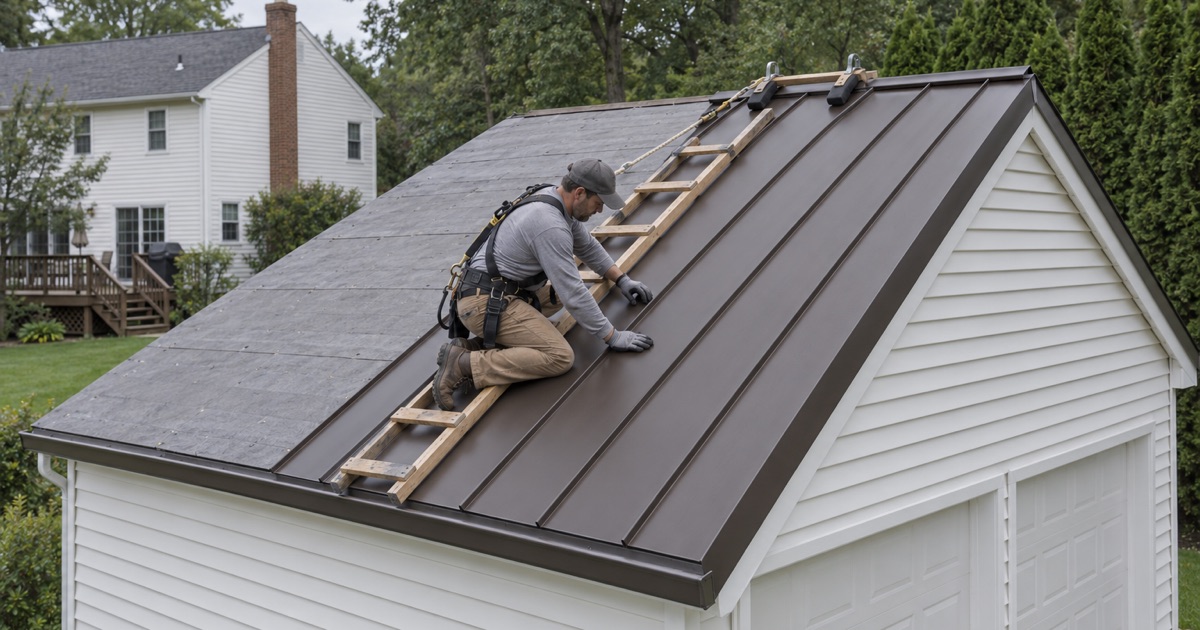
How Standing Seam Works
Standing seam panels run in one piece from ridge to eave, joined by raised seams that lock or snap together above the flat of the roof. The fasteners sit under the seams, hidden from the weather, so there are no exposed screw heads to back out or wear through their washers over time.
Because the seams stand above the water line, rain runs down the flat of each panel without crossing a joint. That makes standing seam a strong choice for low-pitch sections where shingles struggle to shed water.
Clips, Expansion and Panel Length
Metal grows and shrinks with every swing in temperature, and a long panel moves noticeably between a hot summer afternoon and a winter night. Standing seam is attached with clips that let each panel slide slightly as it moves, so the fasteners are not slowly worked loose.
We plan panel lengths, clip spacing and trim details for that movement. Skipping it is why some metal roofs develop oil-canning waves, popped fasteners and leaks at the trim.
Colors and Finishes
Metal panels come with factory-applied finishes in a wide range of colors, from dark bronze and charcoal to lighter shades that reflect more summer heat. We bring samples to the house so the color can be judged against the brick, stone or siding in daylight rather than chosen from a small chip.
Lighter colors stay cooler on the hottest days, while darker ones hide dirt and suit traditional brick fronts. Factory finishes resist fading and chalking far better than paint applied in the field, which is why we never recommend painting a new panel on site.
Where Metal Roofing Fits Best
Low-Pitch Porches, Additions and Dormers
Many houses have a porch roof, rear addition or shed dormer pitched too low for shingles to shed water reliably. Standing seam handles those slopes well and gives the house a clean accent, even when the main roof stays asphalt.
We tie the metal into the main roof with step flashing and counterflashing where it meets a wall, so the joint between the two materials does not become the new leak.
Whole-House Metal Roofs
For a whole-house metal roof, the main questions are budget, the look you want, and how long you expect to own the house. A metal roof’s long service life pays off over decades, so it suits owners planning to stay rather than those selling in a few years.
We check the decking and framing, plan the ventilation at the soffits and ridge, and detail the chimney, skylights and pipe penetrations before the first panel goes up.
Commercial and Outbuilding Metal
On commercial buildings, garages and outbuildings, metal can be installed as standing seam or as through-fastened panels, depending on the structure and budget. Through-fastened panels cost less but rely on gasketed screws that need periodic checking, which we explain before you choose.
Older garages and sheds with rusted panels can often be re-sheeted over sound framing. We check the purlins and fasteners first, because new panels screwed into rotted wood loosen in the first strong wind.
Metal Roofs and Solar Panels
Standing seam is one of the best roofs to carry solar. Clamps grip the raised seams, so the array mounts without drilling through the panels, and the roof underneath is likely to outlast the solar equipment above it. If solar is in your plans, we lay out the seams with the array in mind.
Installation Details That Matter
Decking and Underlayment
We start with a solid deck, replacing any rotted sheathing at the per-sheet price fixed in the contract. Over it goes a high-temperature underlayment suited to metal, with a self-adhering ice and water barrier meeting ASTM D1970 at the eaves, valleys and around penetrations.
Metal heats up in summer sun, and an underlayment not rated for that heat can soften and stick to the panels. Choosing the right one protects the deck and the roof’s warranty.
Flashing, Snow Guards and Penetrations
Chimneys, sidewalls and skylights need metal flashing made to work with the panel profile, and vent pipes need boots designed for metal roofs. Above entries, walkways and lower roofs, snow guards keep sheets of snow from sliding off all at once.
Snow guard layout depends on the panel profile and the roof pitch, and on standing seam the guards clamp to the seams rather than piercing the panel. We place them where sliding snow would do harm and leave the rest of the roof to shed normally.
Contracts and Paperwork
Every metal roofing job is quoted on an itemized estimate, with decking, underlayment, panels, trim, flashing and snow guards on separate lines. Contracts follow New Jersey or Pennsylvania home improvement rules depending on where the house sits, including the right-to-cancel notice.
In New Jersey, a complete new roof is a capital improvement documented on Form ST-8, while a repair is taxable. In Pennsylvania the roofer pays tax on the materials and no separate tax line appears on your bill. We prepare whichever paperwork matches the job.
- 20+ Years in Business
- Line-Item Written Estimates
- NJ and PA Contracts