
Gloucester Township Roofing provides roof leak repair in Gloucester Township, NJ, serving surrounding cities including Pine Hill, Bellmawr, Woodbury, Haddonfield and Mantua, with more than 20 years of experience tracking down leaks that other repairs missed. We fix leaks on shingle, slate, metal and flat roofs, on houses, townhouses and commercial buildings.
The hardest part of fixing a roof leak is finding it. Water enters at one point, runs along the underlayment, rafters or the top of a ceiling, and drips somewhere else entirely. A crew that patches the roof directly above the stain often fixes nothing and leaves you waiting for the next storm to prove it.
That is why every leak call starts in the attic. We follow the water back to where it actually enters, confirm it on the roof, and only then price the repair. You get a written estimate and a plain explanation of what failed, with photos, before any work begins.
Finding the Source of a Roof Leak
Tracing Water from Inside the Attic
In the attic we look for darkened sheathing, water trails on rafters, rusted nail tips and wet or compressed insulation. Fresh stains are darker and soft to the touch, while old ones are dry and ringed, which tells us whether we are looking at today’s leak or one somebody fixed years ago.
We follow the trail uphill toward its highest point, which is usually close to the real entry, then measure that spot against a landmark such as a vent pipe or chimney so it can be found from the roof side without guessing.
Roof Leak, Plumbing or Condensation
Not every ceiling stain is a roof problem. Bath fans that dump warm air into the attic, uninsulated ducts, a leaking supply line, or an air conditioning condensate pan can all drip onto a ceiling. Frost on the underside of the decking in winter melts on the first warm day and looks exactly like a leak.
We check each of these before blaming the roof. If the cause is ventilation or plumbing, we tell you, rather than selling a roof repair that cannot stop the water.
Why Leaks Travel Before They Drip
Water follows gravity and surface tension, so it runs along the top edge of rafters, down the face of underlayment and across ceiling joists before it finds a low spot to fall. On low-slope additions and porch roofs it can run several feet sideways.
Understanding that path is what separates a lasting leak repair from a guess. The stain tells you where to start looking, not where to fix.
Common Leak Points We Repair
Chimney Leaks
Chimneys are the most common leak source we see on older houses. The step flashing along the sides, the counterflashing set into the mortar, and the back pan or cricket on the uphill side all wear out, and many have been covered with roof cement during earlier repairs.
We remove the old metal, install new step flashing, cut a fresh reglet for new counterflashing, and build a cricket where the chimney is wide enough to trap water. If the brick, mortar joints or crown are letting water through, we say so, since flashing alone cannot stop a leak through the masonry.
Pipe Boots, Vents and Exhaust Fans
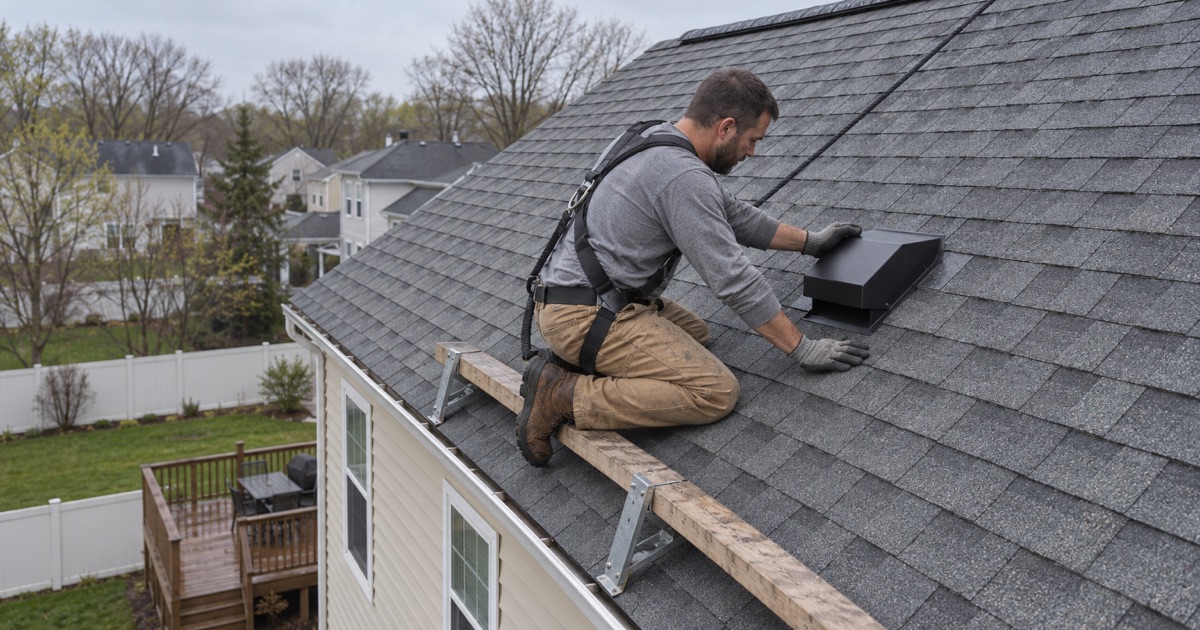
Rubber pipe boots crack and pull away from the pipe after years of sun, letting rain run straight down the vent stack into the attic. Box vents and exhaust fan housings can also loosen or lose their seal.
We replace cracked boots with new ones, reseat loose vents with proper shingle overlap, and replace any rotted decking around them. These are some of the quickest and least expensive leak repairs, which is why catching them early matters.
Skylight Leaks
Skylights leak at the flashing, at the seal between the glass and the frame, or from condensation that collects on cold glass and runs down the well. We figure out which before recommending a fix.
When the unit is sound, new step flashing or a manufacturer’s flashing kit usually solves it. When the glass is fogged or the frame has failed, replacing the skylight while the flashing is open is the better long-term answer.
Where Roofs Meet Walls and Valleys
The joint where a porch or addition roof meets a wall needs step flashing, counterflashing and a kick-out at the bottom so water is pushed into the gutter instead of behind the siding. Valleys, where two roof planes meet, carry more water than any other part of the roof and wear first.
We rebuild these joints with new metal and, in valleys, a self-adhering ice and water barrier meeting ASTM D1970 under the new shingles or metal.
Leaks at the Eaves and Behind Gutters
Water that runs behind a gutter usually means the drip edge is missing or the shingles stop short of the edge. Over time it rots the fascia and shows up as a leak on a soffit, porch ceiling or exterior wall.
We add drip edge, replace rotted fascia and rehang the gutter. In winter, the same eaves are where ice dams form, so we check attic insulation and ventilation as part of the repair.
Ice Dam Leaks in Winter
Ice dams form when heat escaping into the attic melts snow higher on the roof and the water refreezes at the cold eave, backing up under the shingles. Leaks from ice dams often appear on exterior walls and above window heads during a thaw. We deal with the immediate problem safely, then look at attic insulation, air sealing and ventilation, which is where the lasting fix lives.
Emergency Leak Response
Tarps and Temporary Repairs
When water is coming in during a storm, we can tarp the damaged area or set a temporary seal as soon as it is safe to climb. The permanent repair follows on the next dry day, once we can open the roof and fix the source properly.
A temporary repair is exactly that. Tarps are secured to ride out wind without nailing through good shingles where we can avoid it, and we tell you how long one can reasonably stay on. A tarp left in place for months starts to flap and lets water under its edges, adding damage instead of preventing it.
Documenting Storm Leaks for Your Claim
If a storm caused the leak, we photograph the damage, note the date, and write up what we found for your own insurance claim. We can meet the adjuster on site when asked, but the claim is yours to negotiate or to hand to a licensed public adjuster.
Keep your own photos of the interior damage too, along with receipts for anything you spent to stop further water getting in. Policies generally expect an owner to protect the property once a leak is found, and those receipts show that you did.
Leaks on Flat and Commercial Roofs
Membrane Seams, Drains and Curbs
Flat roofs leak at open seams in EPDM, TPO or PVC, at blisters and cracks in modified bitumen, around clogged drains and scuppers, and at rooftop equipment curbs. We locate the leak, clean and prepare the surface, and repair it with membrane and accessories compatible with the existing roof.
Ponding water usually travels with flat-roof leaks, because standing water finds every weak seam and speeds up wear on the membrane. Where the structure allows, we correct low spots or add drainage during the repair. When the membrane has failed across most of its area, we price replacement next to the repair so you can compare the two honestly.
- 20+ Years in Business
- Line-Item Written Estimates
- NJ and PA Contracts